Monthly Event Location
Homolovi State Park visitor center & observatory, AZ-87, Winslow AZ, 86047
Venue
2026 Astronomy presentations & night sky observing are on the 2nd Saturday of each month (April - November). The only Arizona State Park with a permanent observatory.
Hours
Summer hrs. 7 p.m. - 9:30 p.m. MST April, May, June, July August
Winter hrs. 6 p.m. - 8:30 p.m. MST September, October, November
The first hour is a presentation in the park visitor center
The remaining 90 minutes will be observations through the Moore 14" SCT telescope
Winslow-Homolovi Observatory Public Sky Exploration Night
April 11th, 2026 8 p.m. - 9:30 p.m. As sky conditions allow, the observatory will be open to view these objects thru the Moore 14" SCT telescope;
The 2025 Winslow Homolovi Observatory monthly astronomy public outreach program was very educational & entertaining. Over 400 guests attended a variety of educational presentations & viewed galaxies, nebula, star clusters and planets throughout the year. Our 2026 programs are scheduled for the 2nd Saturday of each month, April thru November.
The Winslow Homolovi Observatory will reopen on April 11, 2026 with Dr. Moses P. Milazzo, NASA’s first chief scientist for the Planetary Data Ecosystem (PDE), as our guest speaker in the park visitor center from 7 p.m. - 8 p.m. Dr. Milazzo is a planetary scientist and educator specializing in visible and near-infrared remote sensing, as well as planetary data processing. He has been an active participant on eight NASA spacecraft missions, and has contributed significantly to the development of planetary remote sensing, image processing, cartographic mapping and calibration techniques for a variety of missions and data types, including: MRO, MGS, and Odyssey (Mars); Cassini, Galileo and Voyager(Io, Europa, Ganymede, and Callisto). He also managed the USGS portion of the NASA-funded PLANETS project to develop out-of-school-time planetary science and engineering curricular materials for middle school-aged youth. Dr. Milazzo is Founder and Owner, Other Orb LLC . Dr. Milazzo received his Ph.D. in Planetary Sciences at the University of Arizona in 2005.
Dress warm. Night time can get chilly with a light breeze.
White lights can be used around the visitor center & parking lot. Avoid pointing a white light including car headlights at the observatory.
Red lights only adjacent and inside the observatory. This protects your dark adaptation and gives you a much better eyepiece view.
Please take your time at the eyepiece. The human eye does not work well in the dark. Ask for an assist if you can't see anything thru the eyepiece.
If you have any questions please share. We have quite a few friendly volunteers with a breadth of knowledge and experience.
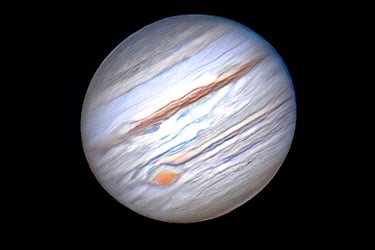
Jupiter & its 4 largest moons
M51, Whirlpool Galaxy, 2 galaxies colliding
M97, Owl Nebula, a planetary nebula
M81, Bode's Galaxy in the Big Dipper
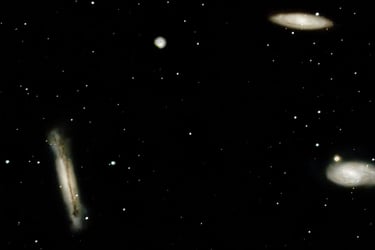
M65-M66, a pair of galaxies in an eyepiece view
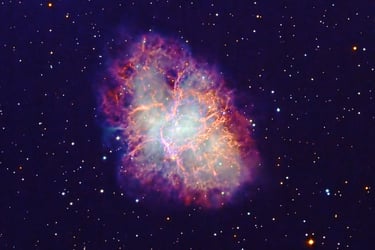
M1, Crab Nebula, supernova remnant
Telescope Etiquette, Comfort, & Seeing